Treat Me Like Your Mother:
Memories of Past, Present and Future.
Treat Me Like Your Mother:
Memories of Past, Present and Future.
The film challenges simplified understandings of Queer History in Lebanon by showing that memory is shaped by contradiction: violence and belonging, rejection and intimacy, survival and nostalgia.
The film challenges simplified understandings of Queer History in Lebanon by showing that memory is shaped by contradiction: violence and belonging, rejection and intimacy, survival and nostalgia.
By: Gónza Rammsy
8 minutes read - Published 4.05.2026
By: Gónza Rammsy
8 minutes read - Published 4.05.2026
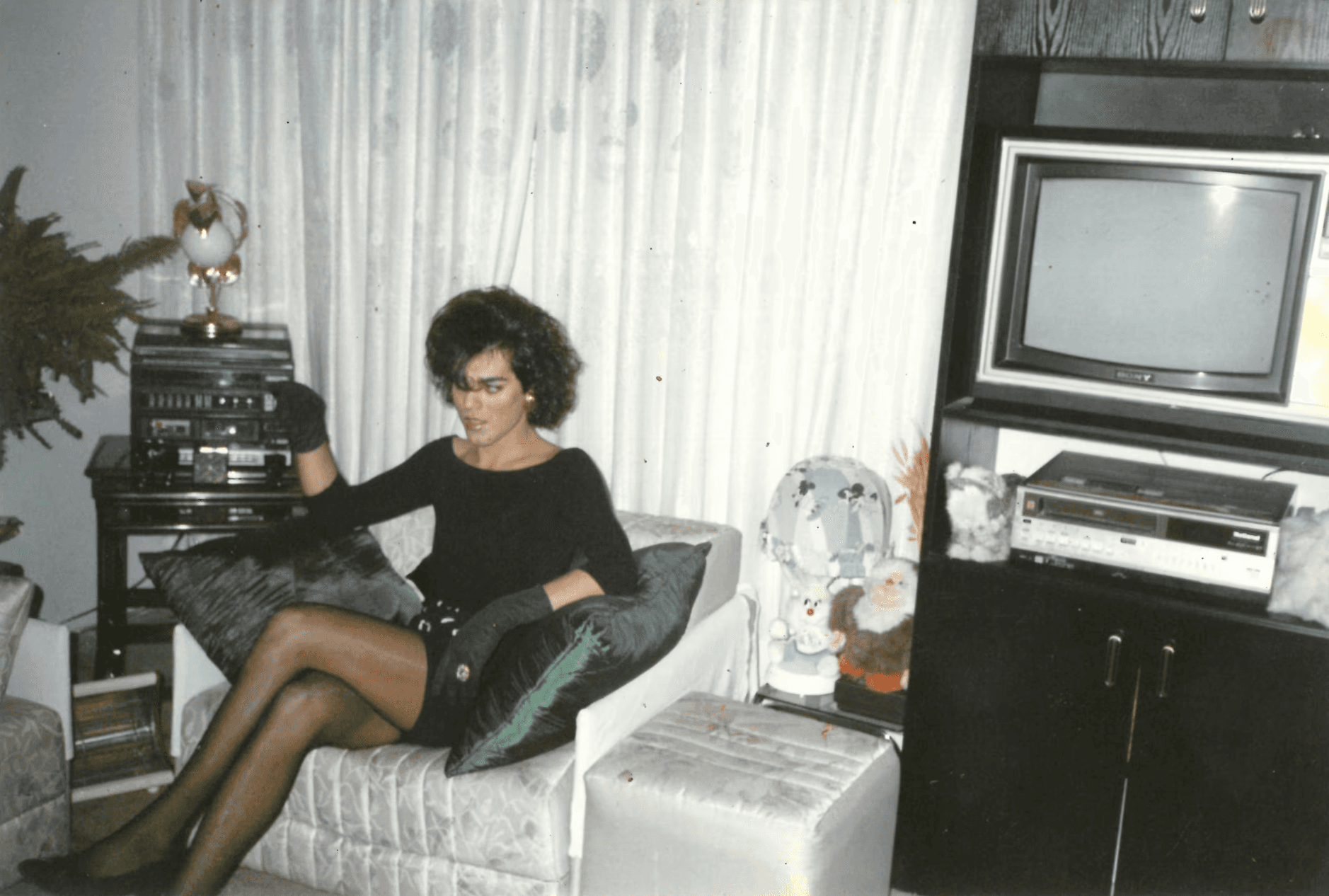
Mohamad Abdouni’s documentary Treat Me Like Your Mother: Trans* Histories of Beirut’s Forgotten Past screened last week at the 17th ALFILM—Arab Film Festival in Berlin explores the hidden histories of Beirut’s Queer and Trans* communities through the intimate and familiar format of the family photo album. It is Abdouni’s first feature documentary; the film combines archival photography, home videos, music and personal testimony in order to document Trans* lives that have been excluded from mainstream Lebanese history. Through this very delicate and personal approach, Abdouni transforms private memory into a collective Queer History, preserving voices that have long remained in the shadows, forgotten.
The film is based on, or perhaps, it can be better understood as an extension of the book by the same name, published by the director through the Cold Cuts magazine, in collaboration with The Arab Image Foundation and a constellation of Queer advocacy cultural groups and institutions. The book pays tribute to ten Trans* women, or as most prefer to call themselves, Tanteit (fr: ladies, unties)—individuals whose lives today have been pushed to the margins of Beirut’s recorded history.
Unlike the book, however, the documentary focuses on four Tanteit: Em Abed, Jamal Abdo, Antonella, and Mama Jad. With the addition of sound, music and the moving image, Abdouni explores their lives with intimacy and empathy. It is as if the film transports you to a couch, sitting alongside you, four aunts, they turn the pages of old photo albums as you listen to their stories unfold. At the same time, the four women begin to feel like a single collective voice—perhaps embodying the larger memory of Beirut’s LGBTQI+ past.
The book offers, by design, two ways of reading these stories. The reader may follow each story vertically by column, or experience them collectively by reading horizontally across the page. The film operates differently. From the very beginning, Abdouni presents memory as a shared experience rather than an isolated one. Archival photographs flicker between different realities, home videos of both Abdouni and the Tanteit blend seamlessly, and personal narratives overlap until they form a collective portrait. This strengthens rather than disrupts our understanding of the documentary, building a single shared world and creating a unique and carefully orchestrated storytelling style.
The images blend with ease, some are deeply engaging with the narratives, sometimes leaving the audience to linger and process what has been said. The rhythm allows reflection and intimacy. In this manner, the documentary does not simply tell stories but invites us into them.
Unsurprisingly, Abdouni’s artistic practise is so strongly drawn to remembrance and preservation of the past. In his “Meet the Artist” video posted by Art Basel on YouTube, he explains: “I work on memory, and the past and softness and family, myself”. For Abdouni, recollection is not only a way of paying respect to those who came before us, but his work revives lives that are at risk of being forgotten, to bring them back into our view, ensuring their struggles remain part of our contemporary Queer History, shaping the way we go into the future.
This focus on memory also extends into the film’s soundtrack. The opening sequence is accompanied by Mayssa Jallad’s song Etel, which reflects on memory, solitude and identity. In lyrics such as “I walk alone and look at the horizons” and “Who lives here? No one lives here”—creates a sense of emotional distance and personal introspection. These ideas are what echo throughout the documentary, where the woman are not only remembering their pasts, but actively reflecting on how those experiences shape their understanding of selfhood and belonging in their present.
Many of the Tanteit also reveal how they understand gender roles within their time. Their perspectives reflect stricter gender binaries from many contemporary understandings, particularly within today’s LGBTQI+ communities. Reminding us that Queer history is never fixed but constantly changing across generations. The documentary makes space for their realities to be expressed with freedom, perhaps showing us a side we didn’t know from our Queer history.
The shadow of the Lebanese Civil War (1975-1990) looms over these women’s lives. Yet they speak of it with calm, which at times is disarming, even proud. Em Abed recalls a childhood memory stating: “I used to halt the war front.. The National Army and the Lebanese Forces both stopped firing”. Mama Jad reflects: “We witnessed glory.. We experienced real men.. But we also witnessed humiliation and beatings. These statements complicate how we imagine the past from the safety of the present.
At the same time, the film does not ignore the violence many of them faced within their own families. Antonella recalls: “They decided to send me to a monastery.. They agreed that was the best solution, to banish me.” That was her family’s answer to who she was. In the book’s forward, Cold Cuts writes that “most of them saw the past as a happier and more accepting place.” The tension between suffering and nostalgia becomes one of the documentary’s most powerful ideas.
By the end of the film, the women reflect on what has changed. Em Abed, once untouchable, speaks today with uncertainty, “God knows what awaits us now.” Jamal Abdo remembers throwing parties to bring her friends joy during wartime. Mama Jad mourns a love that has disappeared, “There was more love.. People’s hearts changed.” Reminder that our past often carries different meanings, and it’s a weight we cannot fully understand from the outside.
This is ultimately what Abdouni’s feature documentary gives us: a different lens. The film challenges simplified understandings of Queer History in Lebanon by showing that memory is shaped by contradiction: violence and belonging, rejection and intimacy, survival and nostalgia. All buried, and now carefully brought back into the light of today. The LGBTQI+ movement in Lebanon, particularly during a period of war, is not a simple story of suffering. Instead, Abdouni represents a layered history of perseverance and complexity, which he presents us through the archetype of the mother—demanding respect, unconditional love and care. The Tanteit do not represent a footnote in Beirut’s history; they are a part of its living fabric, as Mother Earth is to us, humans.
In looking back at their lives, Abdouni asks us to look forward. To let their stories inform our present communities by merging their teachings with ours, forward, into the future.
The colours of the past help us understand our present tones, giving us the courage to imagine what we might become tomorrow.
Mohamad Abdouni’s documentary Treat Me Like Your Mother: Trans* Histories of Beirut’s Forgotten Past screened last week at the 17th ALFILM—Arab Film Festival in Berlin explores the hidden histories of Beirut’s Queer and Trans* communities through the intimate and familiar format of the family photo album. It is Abdouni’s first feature documentary; the film combines archival photography, home videos, music and personal testimony in order to document Trans* lives that have been excluded from mainstream Lebanese history. Through this very delicate and personal approach, Abdouni transforms private memory into a collective Queer History, preserving voices that have long remained in the shadows, forgotten.
The film is based on, or perhaps, it can be better understood as an extension of the book by the same name, published by the director through the Cold Cuts magazine, in collaboration with The Arab Image Foundation and a constellation of Queer advocacy cultural groups and institutions. The book pays tribute to ten Trans* women, or as most prefer to call themselves, Tanteit (fr: ladies, unties)—individuals whose lives today have been pushed to the margins of Beirut’s recorded history.
Unlike the book, however, the documentary focuses on four Tanteit: Em Abed, Jamal Abdo, Antonella, and Mama Jad. With the addition of sound, music and the moving image, Abdouni explores their lives with intimacy and empathy. It is as if the film transports you to a couch, sitting alongside you, four aunts, they turn the pages of old photo albums as you listen to their stories unfold. At the same time, the four women begin to feel like a single collective voice—perhaps embodying the larger memory of Beirut’s LGBTQI+ past.
The book offers, by design, two ways of reading these stories. The reader may follow each story vertically by column, or experience them collectively by reading horizontally across the page. The film operates differently. From the very beginning, Abdouni presents memory as a shared experience rather than an isolated one. Archival photographs flicker between different realities, home videos of both Abdouni and the Tanteit blend seamlessly, and personal narratives overlap until they form a collective portrait. This strengthens rather than disrupts our understanding of the documentary, building a single shared world and creating a unique and carefully orchestrated storytelling style.
The images blend with ease, some are deeply engaging with the narratives, sometimes leaving the audience to linger and process what has been said. The rhythm allows reflection and intimacy. In this manner, the documentary does not simply tell stories but invites us into them.
Unsurprisingly, Abdouni’s artistic practise is so strongly drawn to remembrance and preservation of the past. In his “Meet the Artist” video posted by Art Basel on YouTube, he explains: “I work on memory, and the past and softness and family, myself”. For Abdouni, recollection is not only a way of paying respect to those who came before us, but his work revives lives that are at risk of being forgotten, to bring them back into our view, ensuring their struggles remain part of our contemporary Queer History, shaping the way we go into the future.
This focus on memory also extends into the film’s soundtrack. The opening sequence is accompanied by Mayssa Jallad’s song Etel, which reflects on memory, solitude and identity. In lyrics such as “I walk alone and look at the horizons” and “Who lives here? No one lives here”—creates a sense of emotional distance and personal introspection. These ideas are what echo throughout the documentary, where the woman are not only remembering their pasts, but actively reflecting on how those experiences shape their understanding of selfhood and belonging in their present.
Many of the Tanteit also reveal how they understand gender roles within their time. Their perspectives reflect stricter gender binaries from many contemporary understandings, particularly within today’s LGBTQI+ communities. Reminding us that Queer history is never fixed but constantly changing across generations. The documentary makes space for their realities to be expressed with freedom, perhaps showing us a side we didn’t know from our Queer history.
The shadow of the Lebanese Civil War (1975-1990) looms over these women’s lives. Yet they speak of it with calm, which at times is disarming, even proud. Em Abed recalls a childhood memory stating: “I used to halt the war front.. The National Army and the Lebanese Forces both stopped firing”. Mama Jad reflects: “We witnessed glory.. We experienced real men.. But we also witnessed humiliation and beatings. These statements complicate how we imagine the past from the safety of the present.
At the same time, the film does not ignore the violence many of them faced within their own families. Antonella recalls: “They decided to send me to a monastery.. They agreed that was the best solution, to banish me.” That was her family’s answer to who she was. In the book’s forward, Cold Cuts writes that “most of them saw the past as a happier and more accepting place.” The tension between suffering and nostalgia becomes one of the documentary’s most powerful ideas.
By the end of the film, the women reflect on what has changed. Em Abed, once untouchable, speaks today with uncertainty, “God knows what awaits us now.” Jamal Abdo remembers throwing parties to bring her friends joy during wartime. Mama Jad mourns a love that has disappeared, “There was more love.. People’s hearts changed.” Reminder that our past often carries different meanings, and it’s a weight we cannot fully understand from the outside.
This is ultimately what Abdouni’s feature documentary gives us: a different lens. The film challenges simplified understandings of Queer History in Lebanon by showing that memory is shaped by contradiction: violence and belonging, rejection and intimacy, survival and nostalgia. All buried, and now carefully brought back into the light of today. The LGBTQI+ movement in Lebanon, particularly during a period of war, is not a simple story of suffering. Instead, Abdouni represents a layered history of perseverance and complexity, which he presents us through the archetype of the mother—demanding respect, unconditional love and care. The Tanteit do not represent a footnote in Beirut’s history; they are a part of its living fabric, as Mother Earth is to us, humans.
In looking back at their lives, Abdouni asks us to look forward. To let their stories inform our present communities by merging their teachings with ours, forward, into the future.
The colours of the past help us understand our present tones, giving us the courage to imagine what we might become tomorrow.