Against All Odds and Algorithms:
a love letter to independent cinema
Against All Odds and Algorithms: a love letter to independent cinema
This is my love letter to cinema—and more specifically, independent cinema. I love it because it stubbornly refuses to treat a film like a product on a shelf or a line on a financial spreadsheet. It treats film as an unfiltered human pulse. It's the raw, honest, and beautifully messy truth of our lives up on the screen, and as long as I am curating, programming, and breathing, I never want to stop looking for it.
This is my love letter to cinema—and more specifically, independent cinema. I love it because it stubbornly refuses to treat a film like a product on a shelf or a line on a financial spreadsheet. It treats film as an unfiltered human pulse. It's the raw, honest, and beautifully messy truth of our lives up on the screen, and as long as I am curating, programming, and breathing, I never want to stop looking for it.
By: Hana Khalil
By: Hana Khalil
7 minutes read - Published 3.08.2026
By: Hana Khalil
7 minutes read - Published 3.08.2026
7 minutes read - Published 3.08.2026
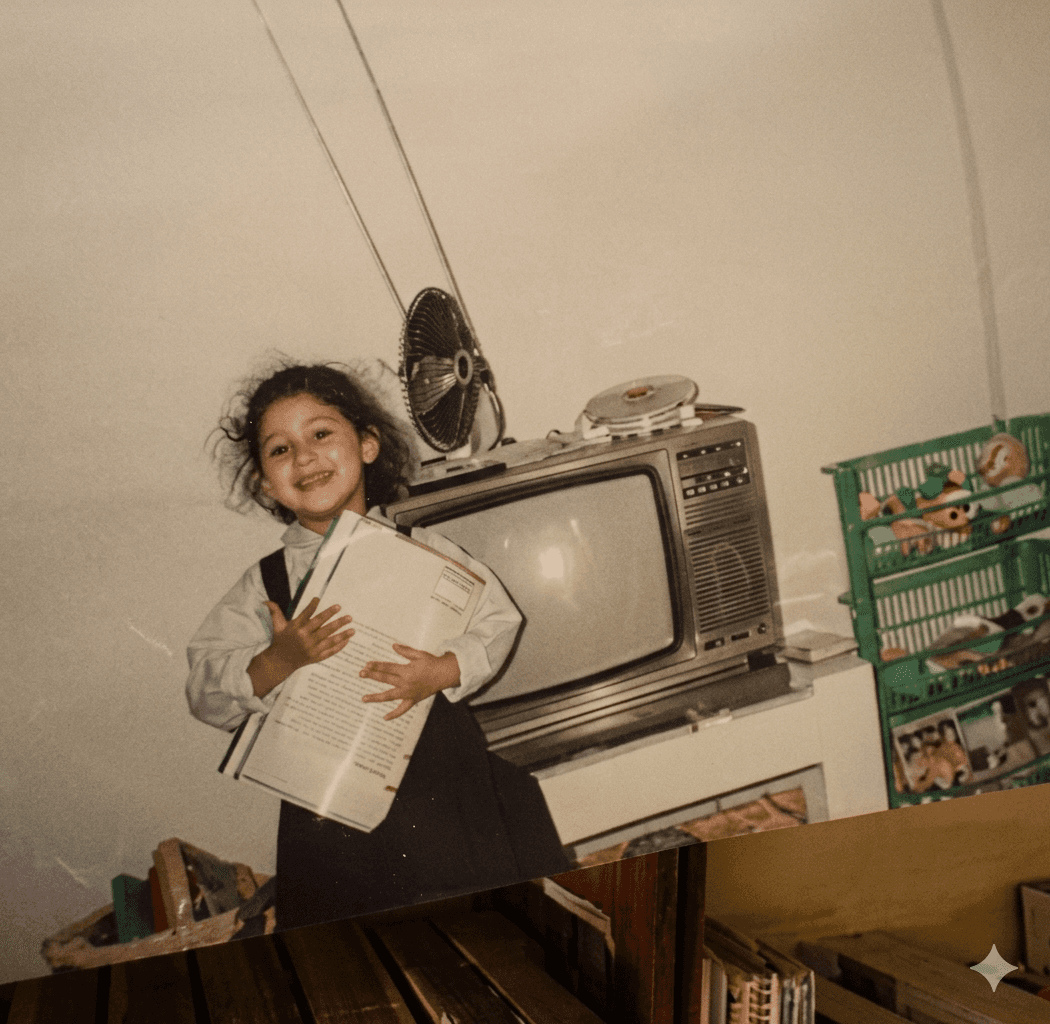
I often look at where I am now and wonder, how on earth did I end up here? If I'm being honest, I inherited my entire film obsession from my dad. The man was an avid film watcher. Every single night, before he went to bed, he had to watch at least one film. And he sat through it all, comedies, fantasies, explosions, and historical epics with the same steady devotion. He consumed it all.
Naturally, this was the 90s, so we didn't have Netflix or fancy streaming options. Our nightly cinematic fate was entirely at the mercy of whatever random program the TV stations decided to broadcast that day. It was mostly American blockbusters, and that's the chaotic soil where my first fascination with cinema began to take root.
But my father had other, more sacred rituals, local TV would play a classic Egyptian black-and-white film every week before the Friday prayer. We're talking the holy grails: Esha'et Hob, Ibn Hamido, Sir Taqiyyat el-ikhfa—all the absolute greats. We also watched other staples on TV, the legendary Adel Emam —Esabet Hamada Weh Touto was a personal favorite of mine. We also cycled through Ahmed Zaki and, of course, the ultimate melodrama queen, Nadia El-Guindy. Now, my mom absolutely did not approve of Nadia El-Guindy. She claimed those films were highly inappropriate for our age. To be fair, I wasn't even a big fan of Nadia El-Guindy, but hey you know what they say about forbidden fruit being the sweetest. The moment my mom said "don't watch," it became mandatory viewing.
We'd also occasionally make a trip to the actual cinema. I can't quite remember what my official first theater film was, but in my soul, I know it was an Adel Emam film, and it was definitely something I was way too young to be watching.
On top of that, we had a VCR that we worked to the bone. My sister and I would play the exact same tape over and over. Our absolute obsession was Hob Ahla Min Al-Hob starring Naglaa Fathy and Mahmoud Yasin. It was this gloriously Egyptianized version of The Sound of Music, and we watched it so many times that we knew every single line of dialogue by heart.
Finally, we got a satellite, which was a total game changer. Even though the channels still had predetermined programs, the options suddenly seemed limitless. And of course, every kid of the 90s knew better than to go on Hotbird. If you know, you know. Navigating that remote when your parents weren't around was a high-stakes operation.
But this is exactly when I saw the first film that ever impacted me and truly stayed with me. Up until this point, the films I watched were fascinating, entertaining, and impressive. But this film almost changed something within me. I connected to the story even though it was far removed from any world I could ever live in, or even imagine.
The film was El-Garage, starring Naglaa Fathy. It's a brutally sad story about a single mom raising her kids while working and living in the garage of a building in Cairo. She then finds out she's terminally ill. With no money and running out of time, she does the unthinkable: she starts selling her children one by one to rich families, just to make sure they survive after she's gone.
The film shook me to the core. For the first time, I realized that films weren't just about escaping or having a laugh with Ismail Yasin and Adel Emam. They could hold up a real, heartbreaking mirror to the world.
I guess from here on, my love for cinematic realism and my obsession with the godfathers of Egyptian New Realism truly started. Once that door opened, I couldn't stop. I went from El-Garage to devouring Atef El-Tayeb's The Bus Driver, Mohamed Khan's Ahlam Hind weh Kamilia, Dawoud Abdel Said's Kit Kat, and Khairy Beshara's Amrica Shika Bika. The list just went on and on.
As the satellite channels exploded and gave us networks that did nothing but broadcast films 24/7, paired with the internet finally becoming a major source of reference, I was able to deeply discover and fall in love with Egyptian cinema of the 1980s. I was completely consumed by the New Egyptian Realism movement that took over that entire decade.
What I didn't realize at the time, as a teenager, finishing high school and continuing to stare at the screen, was that this was my bridge to independent cinema. Long before I even knew what an "indie film" was, my brain was being trained to love them. These filmmakers abandoned the glossy, fake studio sets and took their cameras right onto the gritty streets of Cairo. They didn't care about neat, happy endings or predictable plots; they cared about raw human truths and telling stories about marginalized people who were usually invisible. It taught me that a film didn't need a massive budget or flashy tricks to shake you to the core. It just had to be devastatingly honest.
Years later, I went on to finish my undergraduate degree in Canada. During my second year, I got introduced to some friends who held weekly film nights at their place, and that was my first real, face-to-face experience with independent cinema. That living room became my classroom. There, I watched my first Brazilian film, City of God. I got introduced to the French New Wave Cinema, we watched Spanish films, Korean films, we even watched Lithuanian films. If you ask me today, most of those films would not qualify as independent due to their budgets, but back then, I felt like I was onto something. I was discovering a cinema that didn't shy away from anything, not just in the stories it told, but in its techniques and raw experimentation.
From there, I discovered film festivals. I mean, I always knew film festivals existed, the glamorous ones like Cannes, the Berlinale, and Venice. But this concept of festivals, which always seemed elusively reserved for elite filmmakers and high-brow cinephiles, suddenly didn't feel so intimidating after all.
I remember so clearly the first independent Egyptian film I watched during the Vancouver Arab Film Festival. The film was Microphone. I was completely mesmerised by the content, the juxtaposition, and the sheer bravery of being able to pull off a film like that in a place where every single word is calculated and censored. I remember Ahmed Abdalla, the director, was present for a Q&A after the screening. I raised my hand and with all the confidence in the world told him, "This film makes me feel proud to be an Egyptian"—whatever pride meant to me at the time.
It was the first time I ever watch an independent Egyptian film, I didn't even knew that existed. The film industry in Egypt is so massive and established since the 50s and 60s that barely any of these raw, independent stories ever trickled down to us through the usual TV channels.
Stumbling into that screening was another total life-changing moment for me. It completely shattered the illusion of how films get made. It made me realize: if you want to make a film, you can just go out and do it.
I'll save you a long rant of how I immersed myself in independent cinema from going to festivals, off-spaces, sitting on awfully uncomfortable chairs in the freezing cold and fast forward to today. Somehow, I've ended up on the other side of the curtain as a film programmer. It's funny how life works, the kid who used to navigate the high stakes of a 90s satellite remote is now navigating hundreds of film submissions from all over the world. This world has completely captured me; honestly, it's become a beautiful kind of addiction. I spend my days watching film after film, sitting in the dark and chasing that exact same feeling I had as a child in my family's living room. I am constantly hunting for those raw, uncompromising stories that just refuse to leave your soul.
Now, I'm the one helping shape the very spaces that used to feel so elite, elusive, and intimidating to me. But walking into these spaces as an insider hasn't quieted my mind. Instead, every time the lights go down, I'm left with the same trembling questions. How do we make independent cinema truly accessible to the regular people who need it most? How do we break down the invisible walls of some circuits so that a kid sitting somewhere out there today can stumble onto a life-changing piece of art, just like I did? And crucially, how can we do that while still protecting these films from turning into just another commercial product?
These questions are what keep me up at night, because this is my love letter to cinema—and more specifically, independent cinema.
I love it because it stubbornly refuses to treat a film like a product on a shelf or a line on a financial spreadsheet. It treats film as an unfiltered human pulse. It is art born out of pure, urgent necessity. Independent cinema doesn't exist to feed a corporate machine, pander to a focus group, or satisfy a box office algorithm; it exists because a filmmaker had a truth inside them that simply had to be told, against all odds, non-existent budgets, and suffocating censorship.
It's the raw, honest, and beautifully messy truth of our lives up on the screen, and as long as I am curating, programming, and breathing, I never want to stop looking for it.
I often look at where I am now and wonder, how on earth did I end up here? If I'm being honest, I inherited my entire film obsession from my dad. The man was an avid film watcher. Every single night, before he went to bed, he had to watch at least one film. And he sat through it all, comedies, fantasies, explosions, and historical epics with the same steady devotion. He consumed it all.
Naturally, this was the 90s, so we didn't have Netflix or fancy streaming options. Our nightly cinematic fate was entirely at the mercy of whatever random program the TV stations decided to broadcast that day. It was mostly American blockbusters, and that's the chaotic soil where my first fascination with cinema began to take root.
But my father had other, more sacred rituals, local TV would play a classic Egyptian black-and-white film every week before the Friday prayer. We're talking the holy grails: Esha'et Hob, Ibn Hamido, Sir Taqiyyat el-ikhfa—all the absolute greats. We also watched other staples on TV, the legendary Adel Emam —Esabet Hamada Weh Touto was a personal favorite of mine. We also cycled through Ahmed Zaki and, of course, the ultimate melodrama queen, Nadia El-Guindy. Now, my mom absolutely did not approve of Nadia El-Guindy. She claimed those films were highly inappropriate for our age. To be fair, I wasn't even a big fan of Nadia El-Guindy, but hey you know what they say about forbidden fruit being the sweetest. The moment my mom said "don't watch," it became mandatory viewing.
We'd also occasionally make a trip to the actual cinema. I can't quite remember what my official first theater film was, but in my soul, I know it was an Adel Emam film, and it was definitely something I was way too young to be watching.
On top of that, we had a VCR that we worked to the bone. My sister and I would play the exact same tape over and over. Our absolute obsession was Hob Ahla Min Al-Hob starring Naglaa Fathy and Mahmoud Yasin. It was this gloriously Egyptianized version of The Sound of Music, and we watched it so many times that we knew every single line of dialogue by heart.
Finally, we got a satellite, which was a total game changer. Even though the channels still had predetermined programs, the options suddenly seemed limitless. And of course, every kid of the 90s knew better than to go on Hotbird. If you know, you know. Navigating that remote when your parents weren't around was a high-stakes operation.
But this is exactly when I saw the first film that ever impacted me and truly stayed with me. Up until this point, the films I watched were fascinating, entertaining, and impressive. But this film almost changed something within me. I connected to the story even though it was far removed from any world I could ever live in, or even imagine.
The film was El-Garage, starring Naglaa Fathy. It's a brutally sad story about a single mom raising her kids while working and living in the garage of a building in Cairo. She then finds out she's terminally ill. With no money and running out of time, she does the unthinkable: she starts selling her children one by one to rich families, just to make sure they survive after she's gone.
The film shook me to the core. For the first time, I realized that films weren't just about escaping or having a laugh with Ismail Yasin and Adel Emam. They could hold up a real, heartbreaking mirror to the world.
I guess from here on, my love for cinematic realism and my obsession with the godfathers of Egyptian New Realism truly started. Once that door opened, I couldn't stop. I went from El-Garage to devouring Atef El-Tayeb's The Bus Driver, Mohamed Khan's Ahlam Hind weh Kamilia, Dawoud Abdel Said's Kit Kat, and Khairy Beshara's Amrica Shika Bika. The list just went on and on.
As the satellite channels exploded and gave us networks that did nothing but broadcast films 24/7, paired with the internet finally becoming a major source of reference, I was able to deeply discover and fall in love with Egyptian cinema of the 1980s. I was completely consumed by the New Egyptian Realism movement that took over that entire decade.
What I didn't realize at the time, as a teenager, finishing high school and continuing to stare at the screen, was that this was my bridge to independent cinema. Long before I even knew what an "indie film" was, my brain was being trained to love them. These filmmakers abandoned the glossy, fake studio sets and took their cameras right onto the gritty streets of Cairo. They didn't care about neat, happy endings or predictable plots; they cared about raw human truths and telling stories about marginalized people who were usually invisible. It taught me that a film didn't need a massive budget or flashy tricks to shake you to the core. It just had to be devastatingly honest.
Years later, I went on to finish my undergraduate degree in Canada. During my second year, I got introduced to some friends who held weekly film nights at their place, and that was my first real, face-to-face experience with independent cinema. That living room became my classroom. There, I watched my first Brazilian film, City of God. I got introduced to the French New Wave Cinema, we watched Spanish films, Korean films, we even watched Lithuanian films. If you ask me today, most of those films would not qualify as independent due to their budgets, but back then, I felt like I was onto something. I was discovering a cinema that didn't shy away from anything, not just in the stories it told, but in its techniques and raw experimentation.
From there, I discovered film festivals. I mean, I always knew film festivals existed, the glamorous ones like Cannes, the Berlinale, and Venice. But this concept of festivals, which always seemed elusively reserved for elite filmmakers and high-brow cinephiles, suddenly didn't feel so intimidating after all.
I remember so clearly the first independent Egyptian film I watched during the Vancouver Arab Film Festival. The film was Microphone. I was completely mesmerised by the content, the juxtaposition, and the sheer bravery of being able to pull off a film like that in a place where every single word is calculated and censored. I remember Ahmed Abdalla, the director, was present for a Q&A after the screening. I raised my hand and with all the confidence in the world told him, "This film makes me feel proud to be an Egyptian"—whatever pride meant to me at the time.
It was the first time I ever watch an independent Egyptian film, I didn't even knew that existed. The film industry in Egypt is so massive and established since the 50s and 60s that barely any of these raw, independent stories ever trickled down to us through the usual TV channels.
Stumbling into that screening was another total life-changing moment for me. It completely shattered the illusion of how films get made. It made me realize: if you want to make a film, you can just go out and do it.
I'll save you a long rant of how I immersed myself in independent cinema from going to festivals, off-spaces, sitting on awfully uncomfortable chairs in the freezing cold and fast forward to today. Somehow, I've ended up on the other side of the curtain as a film programmer. It's funny how life works, the kid who used to navigate the high stakes of a 90s satellite remote is now navigating hundreds of film submissions from all over the world. This world has completely captured me; honestly, it's become a beautiful kind of addiction. I spend my days watching film after film, sitting in the dark and chasing that exact same feeling I had as a child in my family's living room. I am constantly hunting for those raw, uncompromising stories that just refuse to leave your soul.
Now, I'm the one helping shape the very spaces that used to feel so elite, elusive, and intimidating to me. But walking into these spaces as an insider hasn't quieted my mind. Instead, every time the lights go down, I'm left with the same trembling questions. How do we make independent cinema truly accessible to the regular people who need it most? How do we break down the invisible walls of some circuits so that a kid sitting somewhere out there today can stumble onto a life-changing piece of art, just like I did? And crucially, how can we do that while still protecting these films from turning into just another commercial product?
These questions are what keep me up at night, because this is my love letter to cinema—and more specifically, independent cinema.
I love it because it stubbornly refuses to treat a film like a product on a shelf or a line on a financial spreadsheet. It treats film as an unfiltered human pulse. It is art born out of pure, urgent necessity. Independent cinema doesn't exist to feed a corporate machine, pander to a focus group, or satisfy a box office algorithm; it exists because a filmmaker had a truth inside them that simply had to be told, against all odds, non-existent budgets, and suffocating censorship.
It's the raw, honest, and beautifully messy truth of our lives up on the screen, and as long as I am curating, programming, and breathing, I never want to stop looking for it.
I often look at where I am now and wonder, how on earth did I end up here? If I'm being honest, I inherited my entire film obsession from my dad. The man was an avid film watcher. Every single night, before he went to bed, he had to watch at least one film. And he sat through it all, comedies, fantasies, explosions, and historical epics with the same steady devotion. He consumed it all.
Naturally, this was the 90s, so we didn't have Netflix or fancy streaming options. Our nightly cinematic fate was entirely at the mercy of whatever random program the TV stations decided to broadcast that day. It was mostly American blockbusters, and that's the chaotic soil where my first fascination with cinema began to take root.
But my father had other, more sacred rituals, local TV would play a classic Egyptian black-and-white film every week before the Friday prayer. We're talking the holy grails: Esha'et Hob, Ibn Hamido, Sir Taqiyyat el-ikhfa—all the absolute greats. We also watched other staples on TV, the legendary Adel Emam —Esabet Hamada Weh Touto was a personal favorite of mine. We also cycled through Ahmed Zaki and, of course, the ultimate melodrama queen, Nadia El-Guindy. Now, my mom absolutely did not approve of Nadia El-Guindy. She claimed those films were highly inappropriate for our age. To be fair, I wasn't even a big fan of Nadia El-Guindy, but hey you know what they say about forbidden fruit being the sweetest. The moment my mom said "don't watch," it became mandatory viewing.
We'd also occasionally make a trip to the actual cinema. I can't quite remember what my official first theater film was, but in my soul, I know it was an Adel Emam film, and it was definitely something I was way too young to be watching.
On top of that, we had a VCR that we worked to the bone. My sister and I would play the exact same tape over and over. Our absolute obsession was Hob Ahla Min Al-Hob starring Naglaa Fathy and Mahmoud Yasin. It was this gloriously Egyptianized version of The Sound of Music, and we watched it so many times that we knew every single line of dialogue by heart.
Finally, we got a satellite, which was a total game changer. Even though the channels still had predetermined programs, the options suddenly seemed limitless. And of course, every kid of the 90s knew better than to go on Hotbird. If you know, you know. Navigating that remote when your parents weren't around was a high-stakes operation.
But this is exactly when I saw the first film that ever impacted me and truly stayed with me. Up until this point, the films I watched were fascinating, entertaining, and impressive. But this film almost changed something within me. I connected to the story even though it was far removed from any world I could ever live in, or even imagine.
The film was El-Garage, starring Naglaa Fathy. It's a brutally sad story about a single mom raising her kids while working and living in the garage of a building in Cairo. She then finds out she's terminally ill. With no money and running out of time, she does the unthinkable: she starts selling her children one by one to rich families, just to make sure they survive after she's gone.
The film shook me to the core. For the first time, I realized that films weren't just about escaping or having a laugh with Ismail Yasin and Adel Emam. They could hold up a real, heartbreaking mirror to the world.
I guess from here on, my love for cinematic realism and my obsession with the godfathers of Egyptian New Realism truly started. Once that door opened, I couldn't stop. I went from El-Garage to devouring Atef El-Tayeb's The Bus Driver, Mohamed Khan's Ahlam Hind weh Kamilia, Dawoud Abdel Said's Kit Kat, and Khairy Beshara's Amrica Shika Bika. The list just went on and on.
As the satellite channels exploded and gave us networks that did nothing but broadcast films 24/7, paired with the internet finally becoming a major source of reference, I was able to deeply discover and fall in love with Egyptian cinema of the 1980s. I was completely consumed by the New Egyptian Realism movement that took over that entire decade.
What I didn't realize at the time, as a teenager, finishing high school and continuing to stare at the screen, was that this was my bridge to independent cinema. Long before I even knew what an "indie film" was, my brain was being trained to love them. These filmmakers abandoned the glossy, fake studio sets and took their cameras right onto the gritty streets of Cairo. They didn't care about neat, happy endings or predictable plots; they cared about raw human truths and telling stories about marginalized people who were usually invisible. It taught me that a film didn't need a massive budget or flashy tricks to shake you to the core. It just had to be devastatingly honest.
Years later, I went on to finish my undergraduate degree in Canada. During my second year, I got introduced to some friends who held weekly film nights at their place, and that was my first real, face-to-face experience with independent cinema. That living room became my classroom. There, I watched my first Brazilian film, City of God. I got introduced to the French New Wave Cinema, we watched Spanish films, Korean films, we even watched Lithuanian films. If you ask me today, most of those films would not qualify as independent due to their budgets, but back then, I felt like I was onto something. I was discovering a cinema that didn't shy away from anything, not just in the stories it told, but in its techniques and raw experimentation.
From there, I discovered film festivals. I mean, I always knew film festivals existed, the glamorous ones like Cannes, the Berlinale, and Venice. But this concept of festivals, which always seemed elusively reserved for elite filmmakers and high-brow cinephiles, suddenly didn't feel so intimidating after all.
I remember so clearly the first independent Egyptian film I watched during the Vancouver Arab Film Festival. The film was Microphone. I was completely mesmerised by the content, the juxtaposition, and the sheer bravery of being able to pull off a film like that in a place where every single word is calculated and censored. I remember Ahmed Abdalla, the director, was present for a Q&A after the screening. I raised my hand and with all the confidence in the world told him, "This film makes me feel proud to be an Egyptian"—whatever pride meant to me at the time.
It was the first time I ever watch an independent Egyptian film, I didn't even knew that existed. The film industry in Egypt is so massive and established since the 50s and 60s that barely any of these raw, independent stories ever trickled down to us through the usual TV channels.
Stumbling into that screening was another total life-changing moment for me. It completely shattered the illusion of how films get made. It made me realize: if you want to make a film, you can just go out and do it.
I'll save you a long rant of how I immersed myself in independent cinema from going to festivals, off-spaces, sitting on awfully uncomfortable chairs in the freezing cold and fast forward to today. Somehow, I've ended up on the other side of the curtain as a film programmer. It's funny how life works, the kid who used to navigate the high stakes of a 90s satellite remote is now navigating hundreds of film submissions from all over the world. This world has completely captured me; honestly, it's become a beautiful kind of addiction. I spend my days watching film after film, sitting in the dark and chasing that exact same feeling I had as a child in my family's living room. I am constantly hunting for those raw, uncompromising stories that just refuse to leave your soul.
Now, I'm the one helping shape the very spaces that used to feel so elite, elusive, and intimidating to me. But walking into these spaces as an insider hasn't quieted my mind. Instead, every time the lights go down, I'm left with the same trembling questions. How do we make independent cinema truly accessible to the regular people who need it most? How do we break down the invisible walls of some circuits so that a kid sitting somewhere out there today can stumble onto a life-changing piece of art, just like I did? And crucially, how can we do that while still protecting these films from turning into just another commercial product?
These questions are what keep me up at night, because this is my love letter to cinema—and more specifically, independent cinema.
I love it because it stubbornly refuses to treat a film like a product on a shelf or a line on a financial spreadsheet. It treats film as an unfiltered human pulse. It is art born out of pure, urgent necessity. Independent cinema doesn't exist to feed a corporate machine, pander to a focus group, or satisfy a box office algorithm; it exists because a filmmaker had a truth inside them that simply had to be told, against all odds, non-existent budgets, and suffocating censorship.
It's the raw, honest, and beautifully messy truth of our lives up on the screen, and as long as I am curating, programming, and breathing, I never want to stop looking for it.