DIY Cultural organizing:
behind the walls in front of the eyes
DIY Cultural organizing:
behind the walls in front of the eyes
DIY Cultural organizing:
behind the walls in front of the eyes
"We were talking about our backgrounds, our native contexts, and the alternative paths we ended up on. We thought of the phrase 'Alter/Native'—a fusion of the words alter and native. You can't spell Alternative without both words. It captured everything we wanted to do — rewriting narratives while staying rooted in the places we come from."
"We were talking about our backgrounds, our native contexts, and the alternative paths we ended up on. We thought of the phrase 'Alter/Native'—a fusion of the words alter and native. You can't spell Alternative without both words. It captured everything we wanted to do — rewriting narratives while staying rooted in the places we come from."
By: Amir Naghavi
7 minutes read - Published 13.01.2026
By: Amir Naghavi
7 minutes read - Published 12.01.2026
Interview with Tamara, Savanna, and Ayman on their DIY off-space cultural festival Alter/Native
[With interviewer’s notes in italics throughout.]
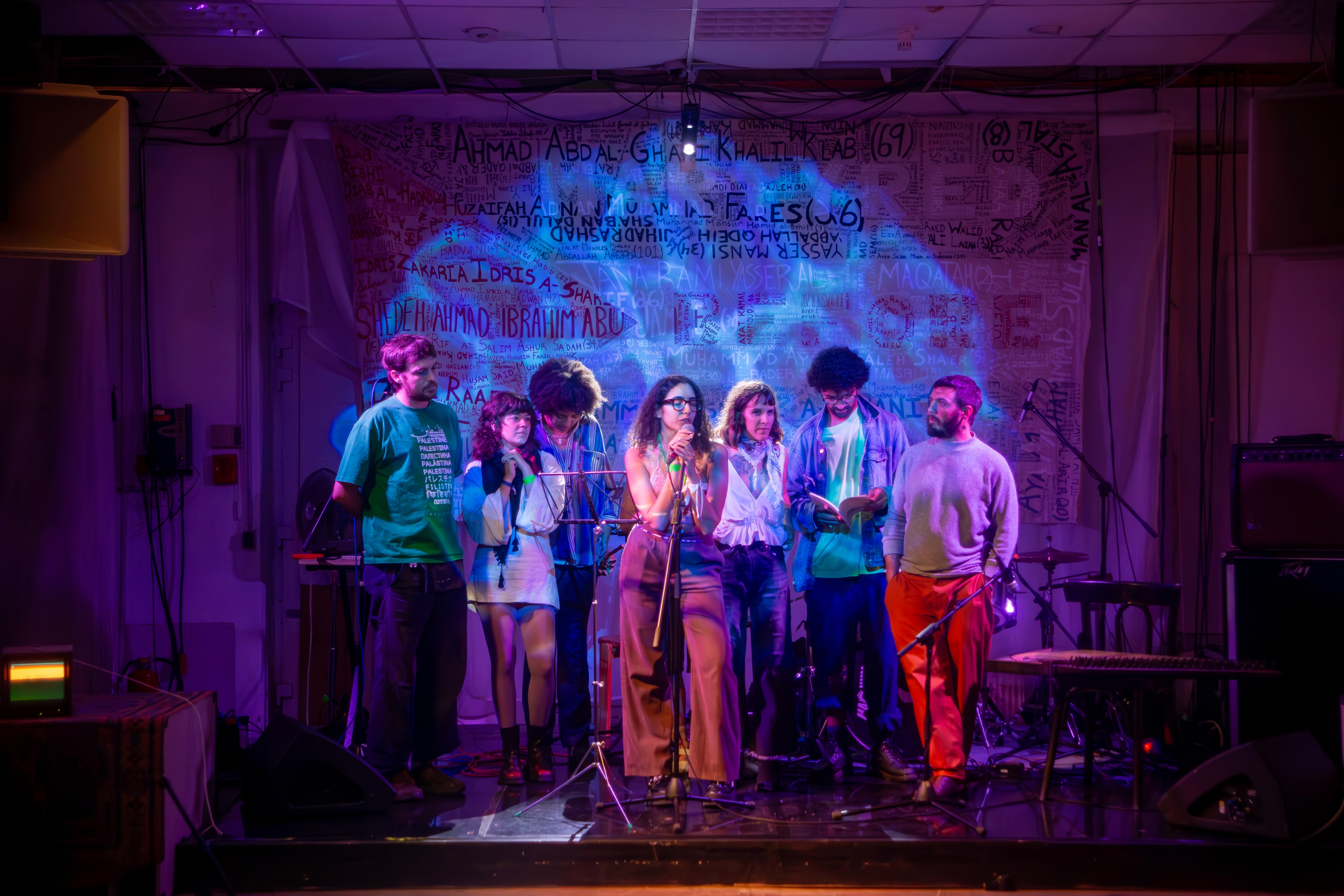
Over September’s confusing weather — the sudden cold rain showers followed by bursts of hot sun — I sat down with Tamara, Savanna, and Ayman, the three core founding members of the DIY festival Alter/Native. Fresh from the festival’s second edition, which unfolded over a weekend in a secret off-space tucked somewhere in the heart of Berlin, we talked about where each of them comes from, how their paths crossed, and what fuels the community growing around this self-organised cultural festival.
How did each of you first find your way into organizing cultural and artistic events?
Ayman: I’m from Lebanon. I left because of the ongoing crises and hardship that made it hard to keep creating like I set up to. I’m a filmmaker and multidisciplinary artist today, but I actually started as an actor. Cinema has always been my way of rewriting narratives, of documenting what’s missing, of educating. At some point, it became clear that I needed to build spaces where those stories could be shared.
Tamara: I’m Palestinian-Jordanian, born and raised in Amman. Palestinian stories were part of my upbringing, but since the start of the genocide, I’ve felt a stronger responsibility to highlight them. Although I was always interested in the arts, I didn’t end up studying anything related to it — my background is in business. But when I came to Berlin on a student exchange, I suddenly saw that making art and working with talented creatives was actually possible for me. This compelled me to stay here.
Savanna: I’m from New York. I left because the capitalist pressure there was unbearable. I got involved in organizing art events in squats — very DIY, very resourceful. It wasn’t about prestige, just providing space. That’s something I carried with me to Berlin. Creating space is the core of all my work.
Their collaboration, they explain, didn’t begin with a plan — it formed almost by accident, through community networks, overlapping ideas, and shared urgencies.
What is Alter/Native?
Ayman: Alter/Native celebrates heritage, indigenous traditions, and alternative ways of narrating where we come from. Savanna and I first met through New York’s ‘half-legal’ art spaces. That ethos shaped everything. The festival is decentralized — built from friendships rather than institutions.
Tamara: We were talking about our backgrounds, our native contexts, and the alternative paths we ended up on. We thought of the phrase "Alter/Native"—a fusion of the words alter and native. You can't spell Alternative without both words. It captured everything we wanted to do — rewriting narratives while staying rooted in the places we come from.
How do you see the cultural landscape in Berlin?
Ayman: Berlin gives you freedom, but it also comes with challenges. Institutions have access and visibility. But independence gives us the ability to move quickly and stay close to our communities. That’s important.
Your organizing appears to be decentralized. How did this network come together?
Savanna: Berlin allows it. When people share values, they share spaces.
They mention cafés that opened their doors, friends of friends offering rooms, people connecting through flyers or Instagram stories.
Tamara: It’s all very fluid. A lot of things happen because someone simply says yes in the right moment.
Who is your audience?
Tamara: We want to tell our own stories, especially to people who’ve only heard dominant narratives.
Savanna: People in Europe need to understand colonization — not theoretically, but through lived stories. That’s what we try to open. The audience is international, shifting, and connected through community.
Tamara: Every artist brings someone new. That’s how it grows.
How do you keep the festival accessible without losing its political depth?
Ayman: It’s about participation. The audience isn’t passive.
Tamara: More than sixty people were involved this year. Everyone contributes something, and everyone receives something back. That creates accessibility.
Savanna: We strive to give everyone visibility. Their own graphic design, their own presence. It makes people feel like they belong.
What challenges come with self-organised collective work?
Ayman: Dedication and compromise.
Tamara: We operate with almost no budget. It’s all built on trust and free labour. But the mission keeps pulling us forward.
They mention Najib and Chichi, whose musical vision connects the festival to Berlin’s wider scene.
Can you share moments from the festival that stayed with you?
They speak about simultaneous worlds forming under one roof: film screenings, poetry, live bands, DJs, and jam sessions. Tamara recalls a Palestinian visitor who quietly wrote on the collective canvas after listening to Azen’s poetry.
Tamara: He said he felt empowered — that he hadn’t felt that way in a long time.
Savanna remembers spontaneous musical collisions — Tunisian electronic sets blending with Senegalese ouds.
Savanna: A man from Guinea who wandered in from Görlitzer Park ended up rapping with the band, then joining a film discussion after Anxious in Beirut.
Ayman talks about a man from Jerusalem who gave a trembling speech after a screening.
Ayman: He said he felt free to speak here. That moment meant everything.
How do you make sure the political message stays present?
Ayman: It’s not just fundraising. It is rewriting narratives. It’s resistance.
Tamara: We always open with speeches that explain why we’re here, who we support, and what drives us.
Savanna: If we don’t decolonize our minds, nothing shifts.
Why is this work urgent now?
Their answers circle back to the same point:
the urgency of storytelling in the face of genocide, displacement, erasure — and the need for solidarity that doesn’t wait for institutional approval.
Has anything surprised you?
Savanna: The energy that comes back. You give so much, but somehow the community gives it back to you.
Final reflections
As I walked away from our conversation, another wave of sun pushing through the late-September clouds, I kept thinking about one tension they mentioned only briefly, but which quietly shapes so much of Berlin’s cultural landscape.
Self-organised projects like Alter/Native try to remain open to everyone, yet they inevitably circulate among people who know the spaces, who move in certain circles, who share certain references and discourses. Despite that, this edition felt unusually successful in breaking through that layer of exclusivity — drawing in people who would never normally find themselves in a space like this.
There is a constant, unresolved tension between state-funded cultural work that reaches wide audiences through visibility and infrastructure, and DIY projects like this one that are driven by urgency, free labour, and dedication. Institutions move slowly but have reach; DIY projects move fast but rely entirely on the people who choose to carry them.
Alter/Native exists right in that tension — and maybe that’s exactly why it feels so alive.
Interview with Tamara, Savanna, and Ayman on their DIY off-space cultural festival Alter/Native
[With interviewer’s notes in italics throughout.]
Over September’s confusing weather — the sudden cold rain showers followed by bursts of hot sun — I sat down with Tamara, Savanna, and Ayman, the three core founding members of the DIY festival Alter/Native. Fresh from the festival’s second edition, which unfolded over a weekend in a secret off-space tucked somewhere in the heart of Berlin, we talked about where each of them comes from, how their paths crossed, and what fuels the community growing around this self-organised cultural festival.
How did each of you first find your way into organizing cultural and artistic events?
Ayman: I’m from Lebanon. I left because of the ongoing crises and hardship that made it hard to keep creating like I set up to. I’m a filmmaker and multidisciplinary artist today, but I actually started as an actor. Cinema has always been my way of rewriting narratives, of documenting what’s missing, of educating. At some point, it became clear that I needed to build spaces where those stories could be shared.
Tamara: I’m Palestinian-Jordanian, born and raised in Amman. Palestinian stories were part of my upbringing, but since the start of the genocide, I’ve felt a stronger responsibility to highlight them. Although I was always interested in the arts, I didn’t end up studying anything related to it — my background is in business. But when I came to Berlin on a student exchange, I suddenly saw that making art and working with talented creatives was actually possible for me. This compelled me to stay here.
Savanna: I’m from New York. I left because the capitalist pressure there was unbearable. I got involved in organizing art events in squats — very DIY, very resourceful. It wasn’t about prestige, just providing space. That’s something I carried with me to Berlin. Creating space is the core of all my work.
Their collaboration, they explain, didn’t begin with a plan — it formed almost by accident, through community networks, overlapping ideas, and shared urgencies.
What is Alter/Native?
Ayman: Alter/Native celebrates heritage, indigenous traditions, and alternative ways of narrating where we come from. Savanna and I first met through New York’s ‘half-legal’ art spaces. That ethos shaped everything. The festival is decentralized — built from friendships rather than institutions.
Tamara: We were talking about our backgrounds, our native contexts, and the alternative paths we ended up on. We thought of the phrase "Alter/Native"—a fusion of the words alter and native. You can't spell Alternative without both words. It captured everything we wanted to do — rewriting narratives while staying rooted in the places we come from.
How do you see the cultural landscape in Berlin?
Ayman: Berlin gives you freedom, but it also comes with challenges. Institutions have access and visibility. But independence gives us the ability to move quickly and stay close to our communities. That’s important.
Your organizing appears to be decentralized. How did this network come together?
Savanna: Berlin allows it. When people share values, they share spaces.
They mention cafés that opened their doors, friends of friends offering rooms, people connecting through flyers or Instagram stories.
Tamara: It’s all very fluid. A lot of things happen because someone simply says yes in the right moment.
Who is your audience?
Tamara: We want to tell our own stories, especially to people who’ve only heard dominant narratives.
Savanna: People in Europe need to understand colonization — not theoretically, but through lived stories. That’s what we try to open. The audience is international, shifting, and connected through community.
Tamara: Every artist brings someone new. That’s how it grows.
How do you keep the festival accessible without losing its political depth?
Ayman: It’s about participation. The audience isn’t passive.
Tamara: More than sixty people were involved this year. Everyone contributes something, and everyone receives something back. That creates accessibility.
Savanna: We strive to give everyone visibility. Their own graphic design, their own presence. It makes people feel like they belong.
What challenges come with self-organised collective work?
Ayman: Dedication and compromise.
Tamara: We operate with almost no budget. It’s all built on trust and free labour. But the mission keeps pulling us forward.
They mention Najib and Chichi, whose musical vision connects the festival to Berlin’s wider scene.
Can you share moments from the festival that stayed with you?
They speak about simultaneous worlds forming under one roof: film screenings, poetry, live bands, DJs, and jam sessions. Tamara recalls a Palestinian visitor who quietly wrote on the collective canvas after listening to Azen’s poetry.
Tamara: He said he felt empowered — that he hadn’t felt that way in a long time.
Savanna remembers spontaneous musical collisions — Tunisian electronic sets blending with Senegalese ouds.
Savanna: A man from Guinea who wandered in from Görlitzer Park ended up rapping with the band, then joining a film discussion after Anxious in Beirut.
Ayman talks about a man from Jerusalem who gave a trembling speech after a screening.
Ayman: He said he felt free to speak here. That moment meant everything.
How do you make sure the political message stays present?
Ayman: It’s not just fundraising. It is rewriting narratives. It’s resistance.
Tamara: We always open with speeches that explain why we’re here, who we support, and what drives us.
Savanna: If we don’t decolonize our minds, nothing shifts.
Why is this work urgent now?
Their answers circle back to the same point:
the urgency of storytelling in the face of genocide, displacement, erasure — and the need for solidarity that doesn’t wait for institutional approval.
Has anything surprised you?
Savanna: The energy that comes back. You give so much, but somehow the community gives it back to you.
Final reflections
As I walked away from our conversation, another wave of sun pushing through the late-September clouds, I kept thinking about one tension they mentioned only briefly, but which quietly shapes so much of Berlin’s cultural landscape.
Self-organised projects like Alter/Native try to remain open to everyone, yet they inevitably circulate among people who know the spaces, who move in certain circles, who share certain references and discourses. Despite that, this edition felt unusually successful in breaking through that layer of exclusivity — drawing in people who would never normally find themselves in a space like this.
There is a constant, unresolved tension between state-funded cultural work that reaches wide audiences through visibility and infrastructure, and DIY projects like this one that are driven by urgency, free labour, and dedication. Institutions move slowly but have reach; DIY projects move fast but rely entirely on the people who choose to carry them.
Alter/Native exists right in that tension — and maybe that’s exactly why it feels so alive.
Interview with Tamara, Savanna, and Ayman on their DIY off-space cultural festival Alter/Native
[With interviewer’s notes in italics throughout.]
Over September’s confusing weather — the sudden cold rain showers followed by bursts of hot sun — I sat down with Tamara, Savanna, and Ayman, the three core founding members of the DIY festival Alter/Native. Fresh from the festival’s second edition, which unfolded over a weekend in a secret off-space tucked somewhere in the heart of Berlin, we talked about where each of them comes from, how their paths crossed, and what fuels the community growing around this self-organised cultural festival.
How did each of you first find your way into organizing cultural and artistic events?
Ayman: I’m from Lebanon. I left because of the ongoing crises and hardship that made it hard to keep creating like I set up to. I’m a filmmaker and multidisciplinary artist today, but I actually started as an actor. Cinema has always been my way of rewriting narratives, of documenting what’s missing, of educating. At some point, it became clear that I needed to build spaces where those stories could be shared.
Tamara: I’m Palestinian-Jordanian, born and raised in Amman. Palestinian stories were part of my upbringing, but since the start of the genocide, I’ve felt a stronger responsibility to highlight them. Although I was always interested in the arts, I didn’t end up studying anything related to it — my background is in business. But when I came to Berlin on a student exchange, I suddenly saw that making art and working with talented creatives was actually possible for me. This compelled me to stay here.
Savanna: I’m from New York. I left because the capitalist pressure there was unbearable. I got involved in organizing art events in squats — very DIY, very resourceful. It wasn’t about prestige, just providing space. That’s something I carried with me to Berlin. Creating space is the core of all my work.
Their collaboration, they explain, didn’t begin with a plan — it formed almost by accident, through community networks, overlapping ideas, and shared urgencies.
What is Alter/Native?
Ayman: Alter/Native celebrates heritage, indigenous traditions, and alternative ways of narrating where we come from. Savanna and I first met through New York’s ‘half-legal’ art spaces. That ethos shaped everything. The festival is decentralized — built from friendships rather than institutions.
Tamara: We were talking about our backgrounds, our native contexts, and the alternative paths we ended up on. We thought of the phrase "Alter/Native"—a fusion of the words alter and native. You can't spell Alternative without both words. It captured everything we wanted to do — rewriting narratives while staying rooted in the places we come from.
How do you see the cultural landscape in Berlin?
Ayman: Berlin gives you freedom, but it also comes with challenges. Institutions have access and visibility. But independence gives us the ability to move quickly and stay close to our communities. That’s important.
Your organizing appears to be decentralized. How did this network come together?
Savanna: Berlin allows it. When people share values, they share spaces.
They mention cafés that opened their doors, friends of friends offering rooms, people connecting through flyers or Instagram stories.
Tamara: It’s all very fluid. A lot of things happen because someone simply says yes in the right moment.
Who is your audience?
Tamara: We want to tell our own stories, especially to people who’ve only heard dominant narratives.
Savanna: People in Europe need to understand colonization — not theoretically, but through lived stories. That’s what we try to open. The audience is international, shifting, and connected through community.
Tamara: Every artist brings someone new. That’s how it grows.
How do you keep the festival accessible without losing its political depth?
Ayman: It’s about participation. The audience isn’t passive.
Tamara: More than sixty people were involved this year. Everyone contributes something, and everyone receives something back. That creates accessibility.
Savanna: We strive to give everyone visibility. Their own graphic design, their own presence. It makes people feel like they belong.
What challenges come with self-organised collective work?
Ayman: Dedication and compromise.
Tamara: We operate with almost no budget. It’s all built on trust and free labour. But the mission keeps pulling us forward.
They mention Najib and Chichi, whose musical vision connects the festival to Berlin’s wider scene.
Can you share moments from the festival that stayed with you?
They speak about simultaneous worlds forming under one roof: film screenings, poetry, live bands, DJs, and jam sessions. Tamara recalls a Palestinian visitor who quietly wrote on the collective canvas after listening to Azen’s poetry.
Tamara: He said he felt empowered — that he hadn’t felt that way in a long time.
Savanna remembers spontaneous musical collisions — Tunisian electronic sets blending with Senegalese ouds.
Savanna: A man from Guinea who wandered in from Görlitzer Park ended up rapping with the band, then joining a film discussion after Anxious in Beirut.
Ayman talks about a man from Jerusalem who gave a trembling speech after a screening.
Ayman: He said he felt free to speak here. That moment meant everything.
How do you make sure the political message stays present?
Ayman: It’s not just fundraising. It is rewriting narratives. It’s resistance.
Tamara: We always open with speeches that explain why we’re here, who we support, and what drives us.
Savanna: If we don’t decolonize our minds, nothing shifts.
Why is this work urgent now?
Their answers circle back to the same point:
the urgency of storytelling in the face of genocide, displacement, erasure — and the need for solidarity that doesn’t wait for institutional approval.
Has anything surprised you?
Savanna: The energy that comes back. You give so much, but somehow the community gives it back to you.
Final reflections
As I walked away from our conversation, another wave of sun pushing through the late-September clouds, I kept thinking about one tension they mentioned only briefly, but which quietly shapes so much of Berlin’s cultural landscape.
Self-organised projects like Alter/Native try to remain open to everyone, yet they inevitably circulate among people who know the spaces, who move in certain circles, who share certain references and discourses. Despite that, this edition felt unusually successful in breaking through that layer of exclusivity — drawing in people who would never normally find themselves in a space like this.
There is a constant, unresolved tension between state-funded cultural work that reaches wide audiences through visibility and infrastructure, and DIY projects like this one that are driven by urgency, free labour, and dedication. Institutions move slowly but have reach; DIY projects move fast but rely entirely on the people who choose to carry them.
Alter/Native exists right in that tension — and maybe that’s exactly why it feels so alive.