Are We Also Olive Trees in Exile?
A Conversation with Filmmaker Abdallah Dannaoui
Are We Also Olive Trees in Exile?
A Conversation with Filmmaker Abdallah Dannaoui
How do you capture the grief of exile when news cameras only focus on war? In Bitter Greens, Tangled Roots, director Abdallah Dannaoui uses intimate WhatsApp calls and quiet landscapes to explore memory, displacement, and what it means to stay rooted far from home.
How do you capture the grief of exile when news cameras only focus on war? In Bitter Greens, Tangled Roots, director Abdallah Dannaoui uses intimate WhatsApp calls and quiet landscapes to explore memory, displacement, and what it means to stay rooted far from home.
6 minutes read - Published 24.08.2026
By: Carina Scherer
By: Carina Scherer
6 minutes read - Published 24.08.2026
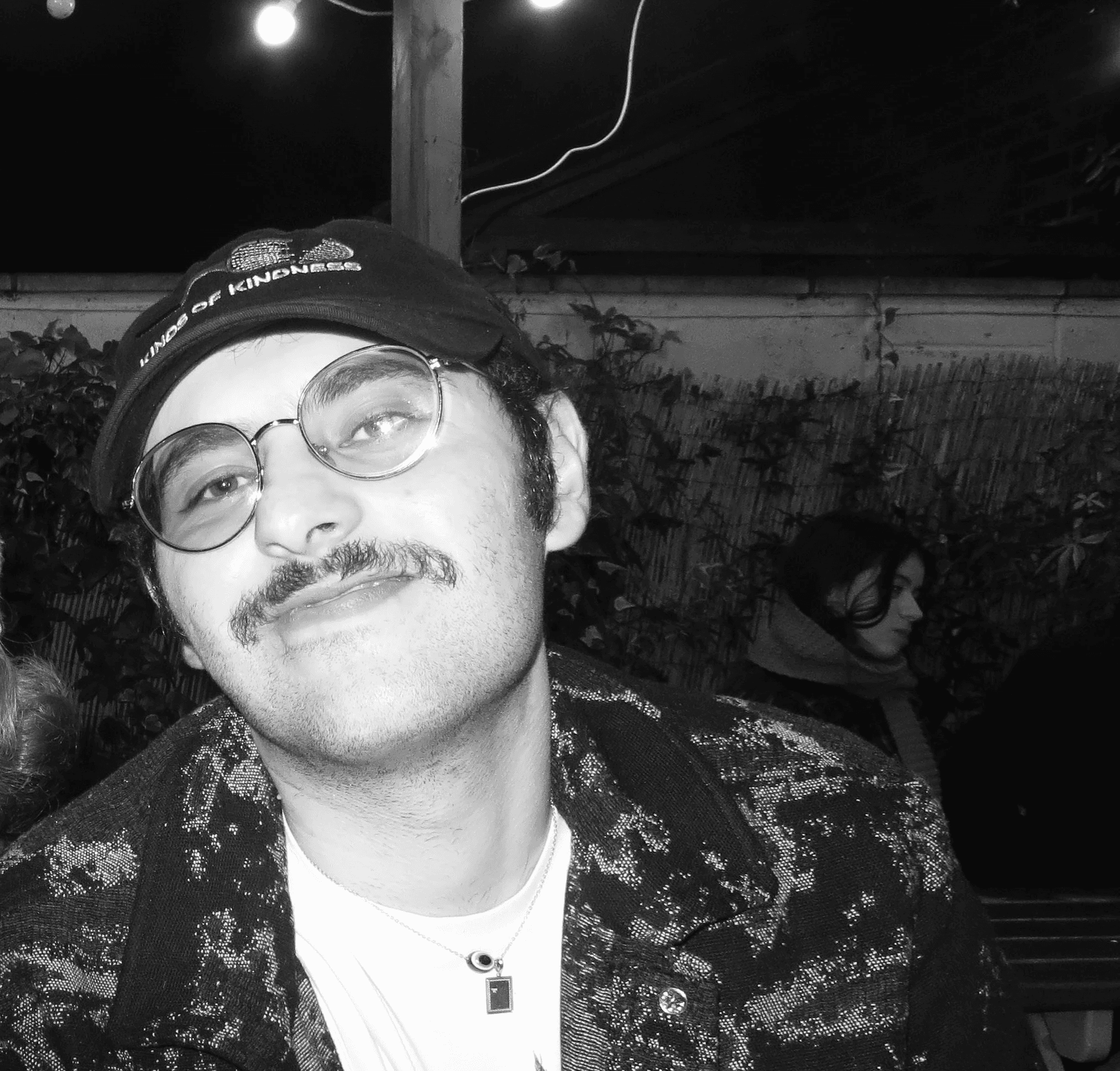
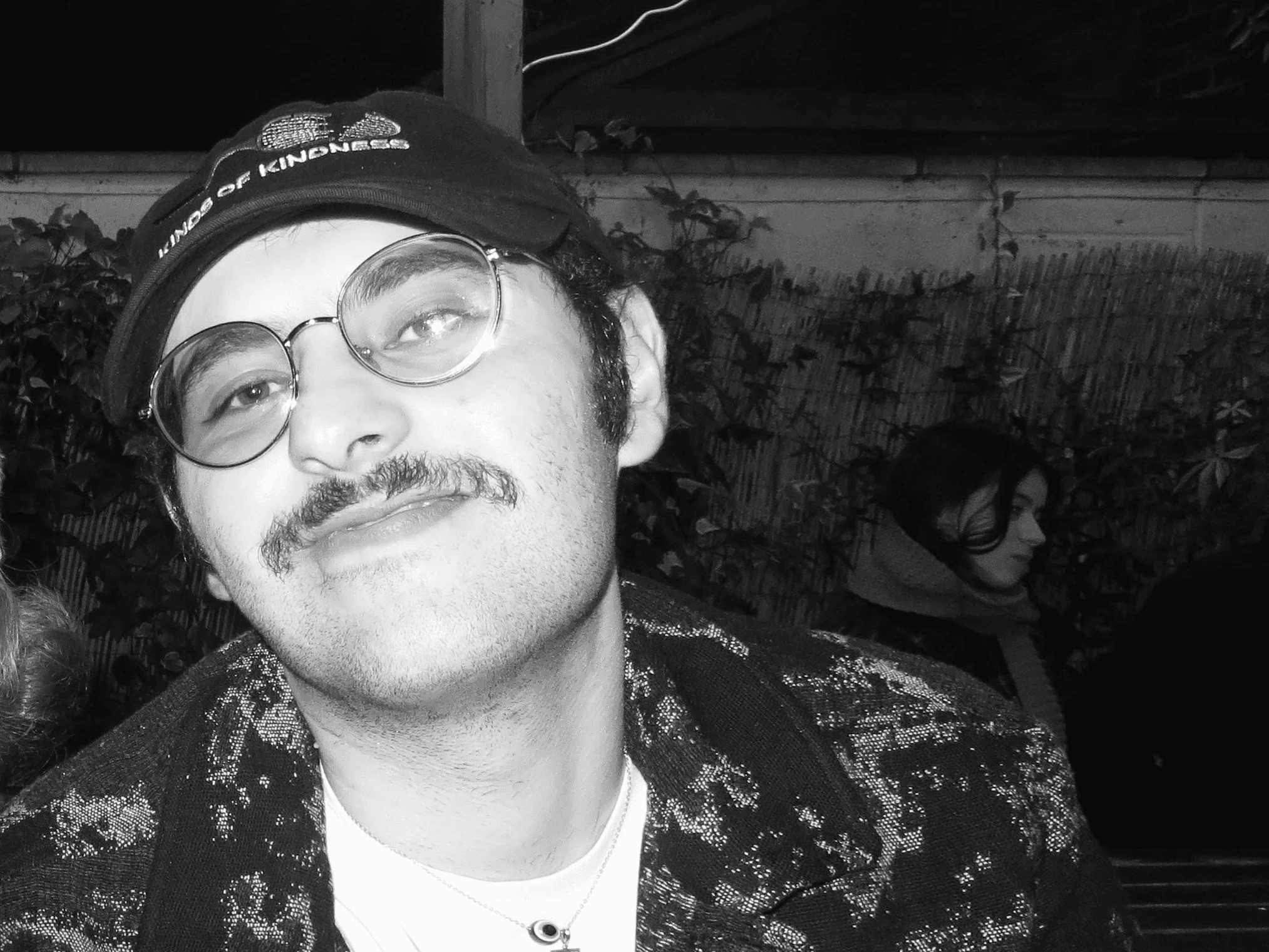
Hailing from Tripoli, Lebanon, filmmaker Abdallah Dannaoui is the director behind Bitter Greens, Tangled Roots (2024), which screened at Cannes' Cinéma du Demain, Rhode Island, and Winterthur before securing international distribution. Alongside his directorial work, Abdallah works as an associate producer and PR production manager on major studio productions, including Bugonia (2025) and Elsinore (2026).
In your own words, what is your short documentary, Bitter Greens, Tangled Roots, about?
I grew up in a family that used to harvest and press our own olives. Still, the land fell into disuse, family members grew apart, and had to leave due to economic instability within the region. Therefore, I wanted to create a personal and poetic reflection on how the idea of this small fruit is used to bring, symbolically, peace within the SWANA region, especially since it is used in every dish we serve in our community. At the same time, I aimed to reflect on the way traditions and memories of a past and a land tainted with ideologies and propaganda can transcend any economic, political, and personal setbacks, especially with what’s occurring near the southern border of Lebanon, without necessarily replicating what the media shows us on television, but in a more honest way, using a phone conversation as a basis for cinema.
Throughout the film, we can hear your and your sister's voices speaking on the phone, reminiscing about the past and reflecting on your life in exile, without seeing you two. What made you choose this format?
Back in late 2023, I originally chose a more direct approach to produce and direct an observational, talking-head documentary, in which I interview members of my family around our olive grove. However, the outbreak of the war began, and travel bans were implemented by the UK government, warning Lebanese expats to avoid travelling to the region. At that point, the only recurring method of communication available to check in on my family was WhatsApp calls, where we would spend hours and hours dissecting the political climate whilst cracking jokes here and there and gossiping about flen w 3elten [= so-and-so]. This captured exactly the rawness and the true sentiment of living far from home; as the viewer is intrigued to know what happens next because the conversation is private, honest, and unscripted. We in real life are experiencing the struggles of not being physically present and feeling the immediacy that our own blood is experiencing in real time.
In your documentary, everyday moments – like a kettle on the stove – are paired with distant sounds of bombs, contrasted by quiet, wide landscapes in Morocco where the camera just sits. What drives those stylistic choices in your cinematography?
I vividly remember sitting on my bed back home in Tripoli, watching Cartoon Network and waiting for my mum to finish cooking lunch, and all of a sudden, the piercing sound of glass shattering as a bullet hit my sister’s bedroom window frightened me. I immediately burst into tears whilst my mum screamed, fearing for our safety. These sounds transmuted into not just sounds, but a sensory overload of different moments blending into one; is that the scream of people fleeing a bomb or is it a kettle whistling? Is it a gunshot, or is it a baby’s piercing hungry shriek? Everyday activities and the stillness of life in such instances are no longer mundane, and I sit there and watch a moment unfold in real time, as if from a completely different source. That’s exactly what occurred when I witnessed a beautiful moment of a Moroccan family farming with a donkey on the side of the road. I stood there, still, for more than 10 minutes, allowing the camera to record, from a distance, the beautiful harmony between them within the verdant landscape of olive tree leaves dancing around them. And to me, the beauty of documentary filmmaking lies in using such an instance as a canvas for projecting the landscape of the beholder's mind.
You use the quote, "When your roots are deep, there's no reason to fear the wind", and your sister adds that it represents every Lebanese person living in exile. Whose quote is it, and how is the film’s title Bitter Greens, Tangled Roots connected to it?
My sister and I grew up hearing this quote being wailed by a different sectarian politician each time they were gearing up for a riot or defending the country after being bombed. So we don’t vividly remember who came up with the saying, because everyone claimed it to defend their own narrative, and at that point we questioned and criticised its effect on our inner turmoil. Between the bitterness of leaving the olive trees that hold and thrive on the memories their caretakers created around them, and the tangled roots that keep us attached to the land wherever the wind takes us, the title is ambivalent and open to interpretation.
Western audiences often view stories from SWANA purely through the lens of conflict. Was it a conscious decision to focus on intimate, personal domesticity to push back against that narrative?
Absolutely, I recall being challenged during a Q&A at Cannes about my stationary wide-landscape shots and why I chose not to include any extreme close-ups of Moroccan individuals harvesting olives in their groves. My focus was never to feed the Western gaze with what they perceive as ‘exotic’, ‘third world’, or ‘troubled ’ – we already get enough of those in the media. On the contrary, I aimed to detach them from such a gaze and present them with purified images of nothingness and normality; as the framed quote shot in a Moroccan household states: ‘The beauty of life is lost when you look only with your eyes’. I can cite countless documentaries on our regional wars and conflicts, and they are all mostly presented in the same way. Still, my focus was to present them as an audiovisual piece where you see a bas-relief sculpture of an olive tree and reflect on my sister’s words about displacement and diasporic grief whilst hearing the chilling factual sounds of bombs being dropped in a Beirut neighbourhood.
Did making this film bring you a sense of resolution regarding your life in exile, or did it open up new questions for you?
Many, many more questions, because here I am in London on a short visa that is due to expire, yet somehow, I do not feel secure going back home. Why? Any Lebanese sharing the same fate would list all the reasons one shouldn’t go back in such terrible times: war, economic volatility, political turbulence, weak film infrastructure, and many more. So, I am in constant self-doubt, which has been reinforced after creating this visual piece about the need to preserve heritage, family memories, and land, yet I still do not wish to put myself through all the above torment. At the end of the film, my sister poetically articulated: ‘Are we also olive trees in exile?’, and the answer to me is arbitrary, because if you uproot a tree, and root it somewhere else, it might survive, or its roots might die.
As a Lebanese filmmaker in exile in the UK, what do you do to stay connected with your roots? Is your sister also living abroad, and have you been able to meet up in person since shooting the film?
I try never to go a day without listening to Fairuz. I want to believe many individuals from the SWANA region living abroad continue the tradition of waking up in the morning and listening to her on the way to work or university. Her songs are not just meditative, but she brings heritage to the fore and encourages you to be proud of who you are – something I tried to distance myself from for years. And now, I’ve got a new obsession with Youmna Saba’s musical pieces; she is my generation’s Fairuz, even though Fairuz is everyone’s generation. Her piece, Nafas, has brought me closer to my sister because I think of her ever since I used it in my short film. We haven’t met up since recording the phone conversation because life circumstances pull us apart; the same with my brother, who resides in the US, and I haven’t seen him since 2018; nor have I seen my other sister and parents since 2021.
What would your life look like if you were working as a filmmaker in Lebanon? What are your hopes and fears for the future of Lebanese filmmaking?
I would be struggling, I have to admit. In Lebanon, our system runs on something called ‘Wasta’ (who you know), meaning one gets privileges if one has direct personal relationships with a politician, for example, based on personal or financial gain. And so, film infrastructure is frail, and the high-pressure focus on recycling sensationalist televisual stories to drive viewership is tarnishing the potential intellectual archive of societal anxieties. However, I am thrilled to witness, as never before, Lebanese creatives thriving abroad and restoring a wave of authentic storytelling that doesn’t shy away from telling the truth, but rather looks it directly in the eye and challenges it for identity reflection and cultural growth during troubled times. So, I aim to be part of this creative cohort that can influence the Ministry of Culture to invest in the arts and support its creatives, rather than relying solely on foreign grants and international investments.
Are you currently working on a new film project?
I am currently developing my first feature-length arthouse drama film, Blood Moon over Olives [Working Title], co-produced between the UK and Lebanon. I’m using olive trees yet again as a background for poetic reflection on identity and trauma whilst challenging the social stigma around people living with HIV who feared for their own lives and their families' lives during and after the Lebanese Civil War.
Hailing from Tripoli, Lebanon, filmmaker Abdallah Dannaoui is the director behind Bitter Greens, Tangled Roots (2024), which screened at Cannes' Cinéma du Demain, Rhode Island, and Winterthur before securing international distribution. Alongside his directorial work, Abdallah works as an associate producer and PR production manager on major studio productions, including Bugonia (2025) and Elsinore (2026).
In your own words, what is your short documentary, Bitter Greens, Tangled Roots, about?
I grew up in a family that used to harvest and press our own olives. Still, the land fell into disuse, family members grew apart, and had to leave due to economic instability within the region. Therefore, I wanted to create a personal and poetic reflection on how the idea of this small fruit is used to bring, symbolically, peace within the SWANA region, especially since it is used in every dish we serve in our community. At the same time, I aimed to reflect on the way traditions and memories of a past and a land tainted with ideologies and propaganda can transcend any economic, political, and personal setbacks, especially with what’s occurring near the southern border of Lebanon, without necessarily replicating what the media shows us on television, but in a more honest way, using a phone conversation as a basis for cinema.
Throughout the film, we can hear your and your sister's voices speaking on the phone, reminiscing about the past and reflecting on your life in exile, without seeing you two. What made you choose this format?
Back in late 2023, I originally chose a more direct approach to produce and direct an observational, talking-head documentary, in which I interview members of my family around our olive grove. However, the outbreak of the war began, and travel bans were implemented by the UK government, warning Lebanese expats to avoid travelling to the region. At that point, the only recurring method of communication available to check in on my family was WhatsApp calls, where we would spend hours and hours dissecting the political climate whilst cracking jokes here and there and gossiping about flen w 3elten [= so-and-so]. This captured exactly the rawness and the true sentiment of living far from home; as the viewer is intrigued to know what happens next because the conversation is private, honest, and unscripted. We in real life are experiencing the struggles of not being physically present and feeling the immediacy that our own blood is experiencing in real time.
In your documentary, everyday moments – like a kettle on the stove – are paired with distant sounds of bombs, contrasted by quiet, wide landscapes in Morocco where the camera just sits. What drives those stylistic choices in your cinematography?
I vividly remember sitting on my bed back home in Tripoli, watching Cartoon Network and waiting for my mum to finish cooking lunch, and all of a sudden, the piercing sound of glass shattering as a bullet hit my sister’s bedroom window frightened me. I immediately burst into tears whilst my mum screamed, fearing for our safety. These sounds transmuted into not just sounds, but a sensory overload of different moments blending into one; is that the scream of people fleeing a bomb or is it a kettle whistling? Is it a gunshot, or is it a baby’s piercing hungry shriek? Everyday activities and the stillness of life in such instances are no longer mundane, and I sit there and watch a moment unfold in real time, as if from a completely different source. That’s exactly what occurred when I witnessed a beautiful moment of a Moroccan family farming with a donkey on the side of the road. I stood there, still, for more than 10 minutes, allowing the camera to record, from a distance, the beautiful harmony between them within the verdant landscape of olive tree leaves dancing around them. And to me, the beauty of documentary filmmaking lies in using such an instance as a canvas for projecting the landscape of the beholder's mind.
You use the quote, "When your roots are deep, there's no reason to fear the wind", and your sister adds that it represents every Lebanese person living in exile. Whose quote is it, and how is the film’s title Bitter Greens, Tangled Roots connected to it?
My sister and I grew up hearing this quote being wailed by a different sectarian politician each time they were gearing up for a riot or defending the country after being bombed. So we don’t vividly remember who came up with the saying, because everyone claimed it to defend their own narrative, and at that point we questioned and criticised its effect on our inner turmoil. Between the bitterness of leaving the olive trees that hold and thrive on the memories their caretakers created around them, and the tangled roots that keep us attached to the land wherever the wind takes us, the title is ambivalent and open to interpretation.
Western audiences often view stories from SWANA purely through the lens of conflict. Was it a conscious decision to focus on intimate, personal domesticity to push back against that narrative?
Absolutely, I recall being challenged during a Q&A at Cannes about my stationary wide-landscape shots and why I chose not to include any extreme close-ups of Moroccan individuals harvesting olives in their groves. My focus was never to feed the Western gaze with what they perceive as ‘exotic’, ‘third world’, or ‘troubled ’ – we already get enough of those in the media. On the contrary, I aimed to detach them from such a gaze and present them with purified images of nothingness and normality; as the framed quote shot in a Moroccan household states: ‘The beauty of life is lost when you look only with your eyes’. I can cite countless documentaries on our regional wars and conflicts, and they are all mostly presented in the same way. Still, my focus was to present them as an audiovisual piece where you see a bas-relief sculpture of an olive tree and reflect on my sister’s words about displacement and diasporic grief whilst hearing the chilling factual sounds of bombs being dropped in a Beirut neighbourhood.
Did making this film bring you a sense of resolution regarding your life in exile, or did it open up new questions for you?
Many, many more questions, because here I am in London on a short visa that is due to expire, yet somehow, I do not feel secure going back home. Why? Any Lebanese sharing the same fate would list all the reasons one shouldn’t go back in such terrible times: war, economic volatility, political turbulence, weak film infrastructure, and many more. So, I am in constant self-doubt, which has been reinforced after creating this visual piece about the need to preserve heritage, family memories, and land, yet I still do not wish to put myself through all the above torment. At the end of the film, my sister poetically articulated: ‘Are we also olive trees in exile?’, and the answer to me is arbitrary, because if you uproot a tree, and root it somewhere else, it might survive, or its roots might die.
As a Lebanese filmmaker in exile in the UK, what do you do to stay connected with your roots? Is your sister also living abroad, and have you been able to meet up in person since shooting the film?
I try never to go a day without listening to Fairuz. I want to believe many individuals from the SWANA region living abroad continue the tradition of waking up in the morning and listening to her on the way to work or university. Her songs are not just meditative, but she brings heritage to the fore and encourages you to be proud of who you are – something I tried to distance myself from for years. And now, I’ve got a new obsession with Youmna Saba’s musical pieces; she is my generation’s Fairuz, even though Fairuz is everyone’s generation. Her piece, Nafas, has brought me closer to my sister because I think of her ever since I used it in my short film. We haven’t met up since recording the phone conversation because life circumstances pull us apart; the same with my brother, who resides in the US, and I haven’t seen him since 2018; nor have I seen my other sister and parents since 2021.
What would your life look like if you were working as a filmmaker in Lebanon? What are your hopes and fears for the future of Lebanese filmmaking?
I would be struggling, I have to admit. In Lebanon, our system runs on something called ‘Wasta’ (who you know), meaning one gets privileges if one has direct personal relationships with a politician, for example, based on personal or financial gain. And so, film infrastructure is frail, and the high-pressure focus on recycling sensationalist televisual stories to drive viewership is tarnishing the potential intellectual archive of societal anxieties. However, I am thrilled to witness, as never before, Lebanese creatives thriving abroad and restoring a wave of authentic storytelling that doesn’t shy away from telling the truth, but rather looks it directly in the eye and challenges it for identity reflection and cultural growth during troubled times. So, I aim to be part of this creative cohort that can influence the Ministry of Culture to invest in the arts and support its creatives, rather than relying solely on foreign grants and international investments.
Are you currently working on a new film project?
I am currently developing my first feature-length arthouse drama film, Blood Moon over Olives [Working Title], co-produced between the UK and Lebanon. I’m using olive trees yet again as a background for poetic reflection on identity and trauma whilst challenging the social stigma around people living with HIV who feared for their own lives and their families' lives during and after the Lebanese Civil War.